
Published!
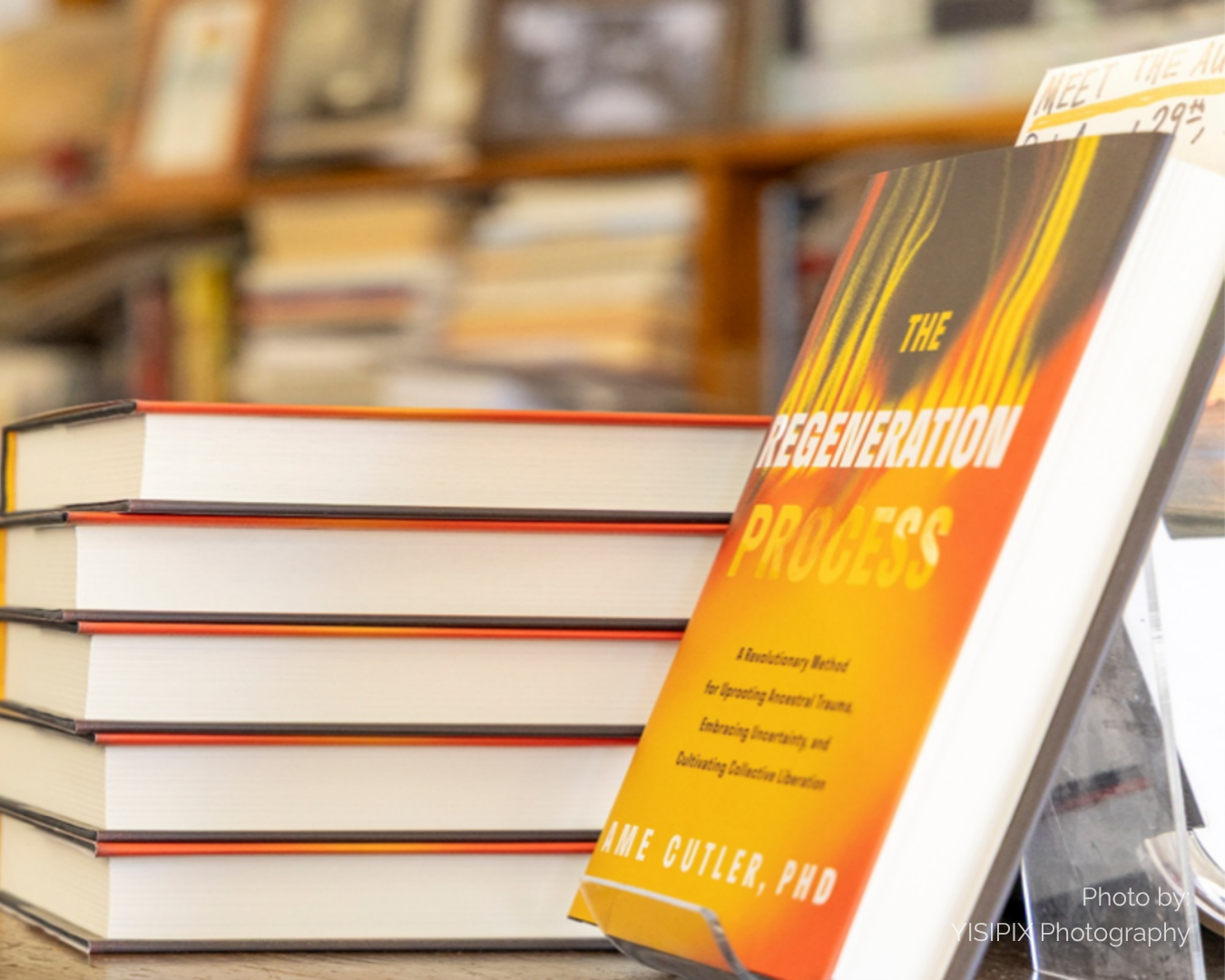
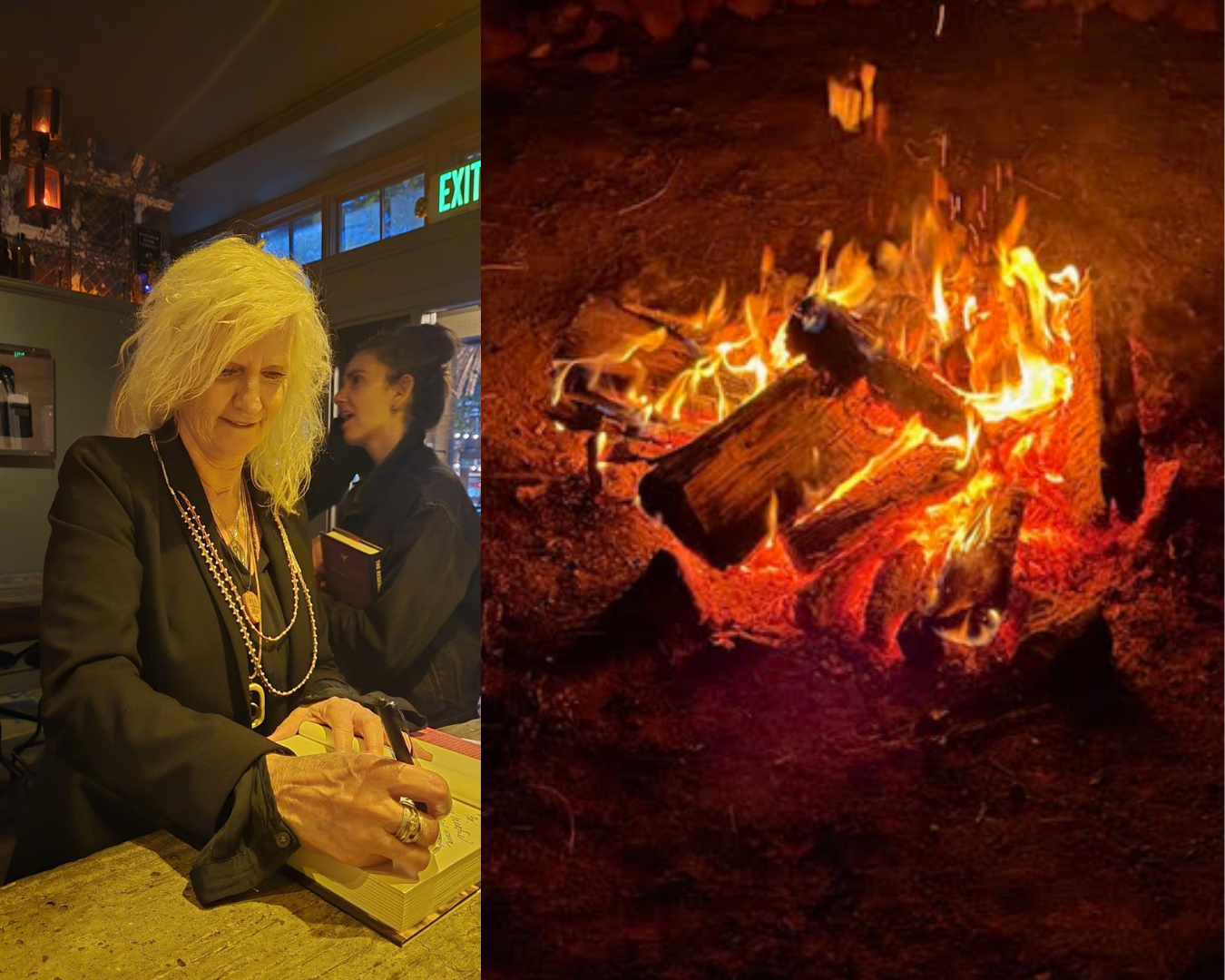
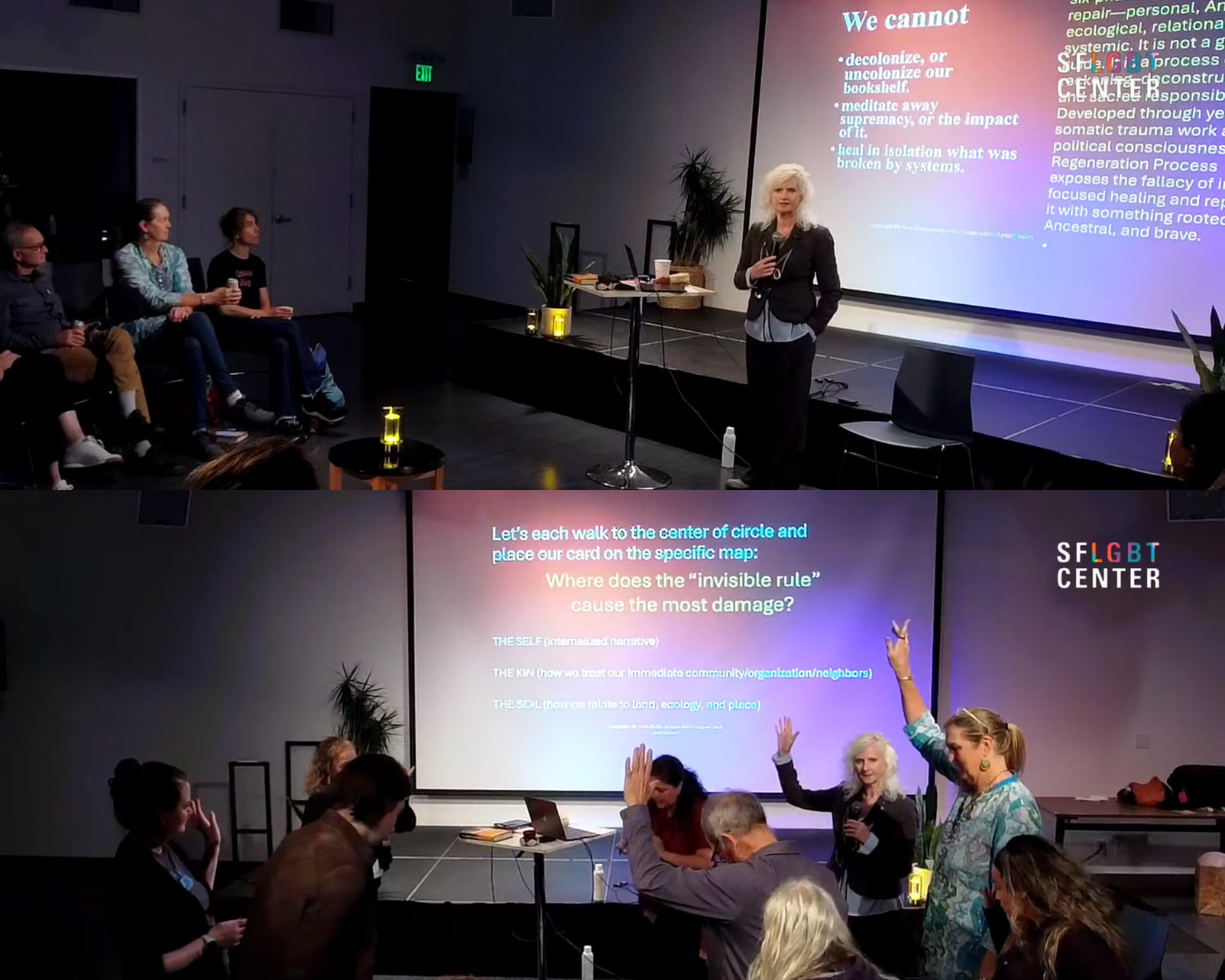
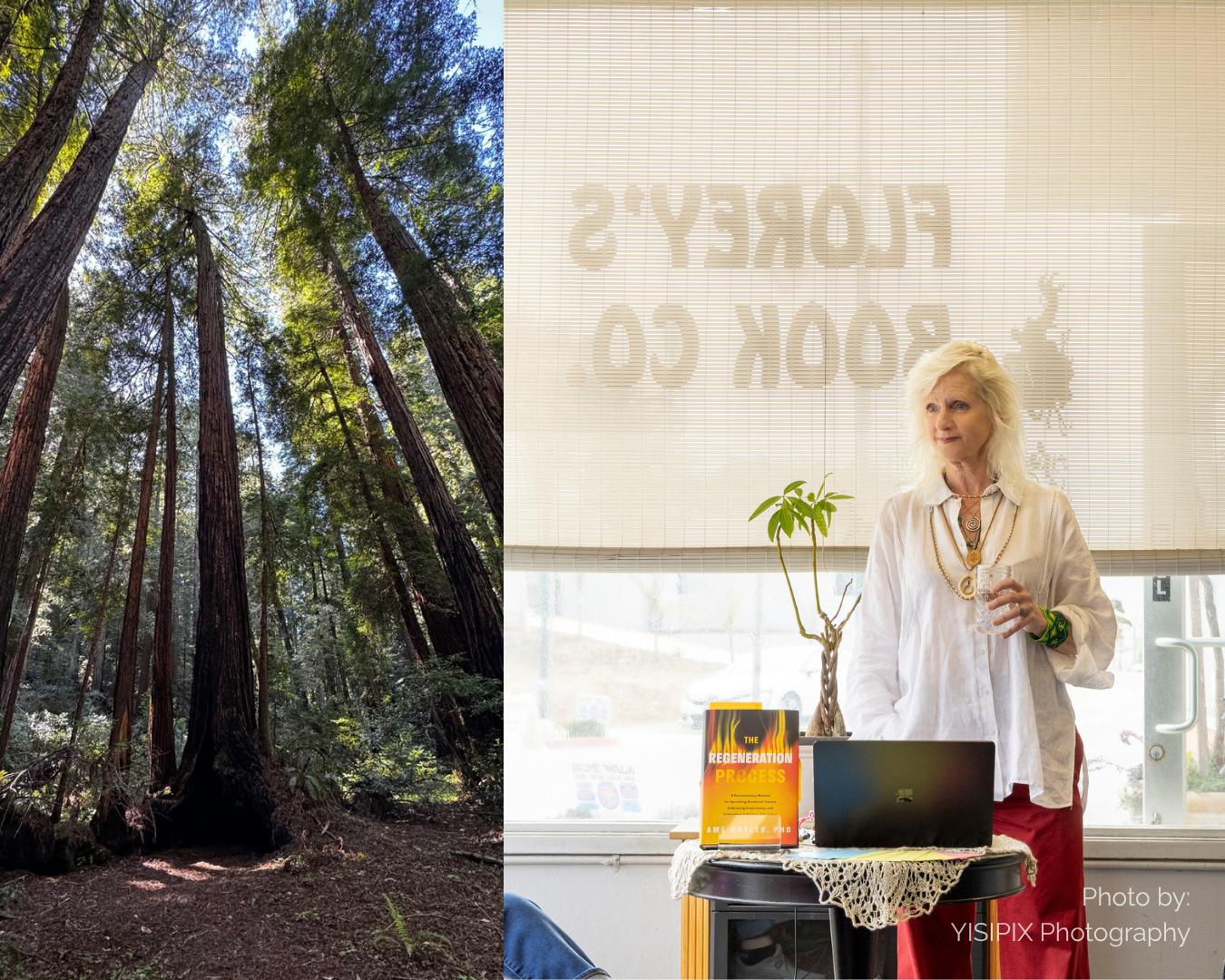
Launch week in the Bay Area was so fun! And I am deeply grateful to all who participated in it! From the Zoom Kick Off Call & the Launch Night Signing and Celebration, to the Bonfire & Regenerative Visions Storytelling (both led by the children who attended, to a fun Book Lounge & Community Gathering at the LGBT Center, to a Mindful Walk in Muir Woods, to a Book Talk & Signing at Florey’s Book Co. What a wonderful way to begin the life of my book—The Regeneration Process!
I offer you another quote from the book:
“Deconstruction was not an easy phase to endure, but looking back, I understand it was necessary—one of the most necessary parts of my journey. We often think of healing as something soothing, but in truth the process of healing involves extended discomfort. In my own journey of regeneration this phase of healing felt
like unraveling—slowly, steadily dismantling the structures that had once kept me safe but also held me captive. It meant engaging with the pain of my past, of our collective past, and opening myself to truths I had long avoided.
For me, the process began with two quiet but insistent questions: “What will it take for me to be truly aligned in my life?” and “What am I holding onto that no longer serves me?” They seemed familiar to other times in my life when I made intentions to change, so in some way they felt both significant and routine, but these repeating questions were now leading me to some of the most uncomfortable revelations of my life. I had spent years building an identity around the ideals of productivity, self-reliance, accomplishment, and independence—values that I later realized were deeply rooted in the Eurocentric paradigm I had been raised in. As I started peeling back those layers, I found at the core the experiences of my Ancestors—both those who had been oppressed and those who had perpetuated oppression—woven into my beliefs about what it meant to be successful.
The more I examined my Ancestral stories, the more I saw how they had shaped not only my identity but also my relationships, my work, my sense of self-worth. The hardest part of this deconstruction was confronting the parts of me that had benefited from systems of power I had never chosen but had unconsciously upheld. The stories of conquest, domination, and separation lived in me, even as I longed for connection and healing.
Sitting with this discomfort—acknowledging the shame, grief, guilt, and confusion that came with it—was an act of courage. Deconstruction demands that we sit with the raw discomfort of confronting our complicity in systems of harm. It requires us to face the grief, guilt, and rage that emerge when we peel back the layers of privilege, oppression, and over-consumption within ourselves and our communities. It was only through allowing myself to see how the break down of my physical body was a symptom of the breaking apart on my cultural belief systems that needed to happen in order for true healing to occur. In the stopping and committing to change I was forced to question everything I had learned, and to sit with the unknown. By doing so, I opened myself up to the possibilities of transformation. Yet, in this phase of deconstruction I did not see these possibilities, I only felt the pull to keep moving through it, a force of inner-trust developed during previous times of change in my life (Cutler, 2026 p.70).”
Check out my chat with Laura Reagan
on
Therapy Chat Podcast
Watch the San Francisco LGBT Center
Book Lounge on
YouTube